




Forestry
Selective Logging vs. Clear-Cutting: What the Science Says for Small Woodlands
September 25, 2026
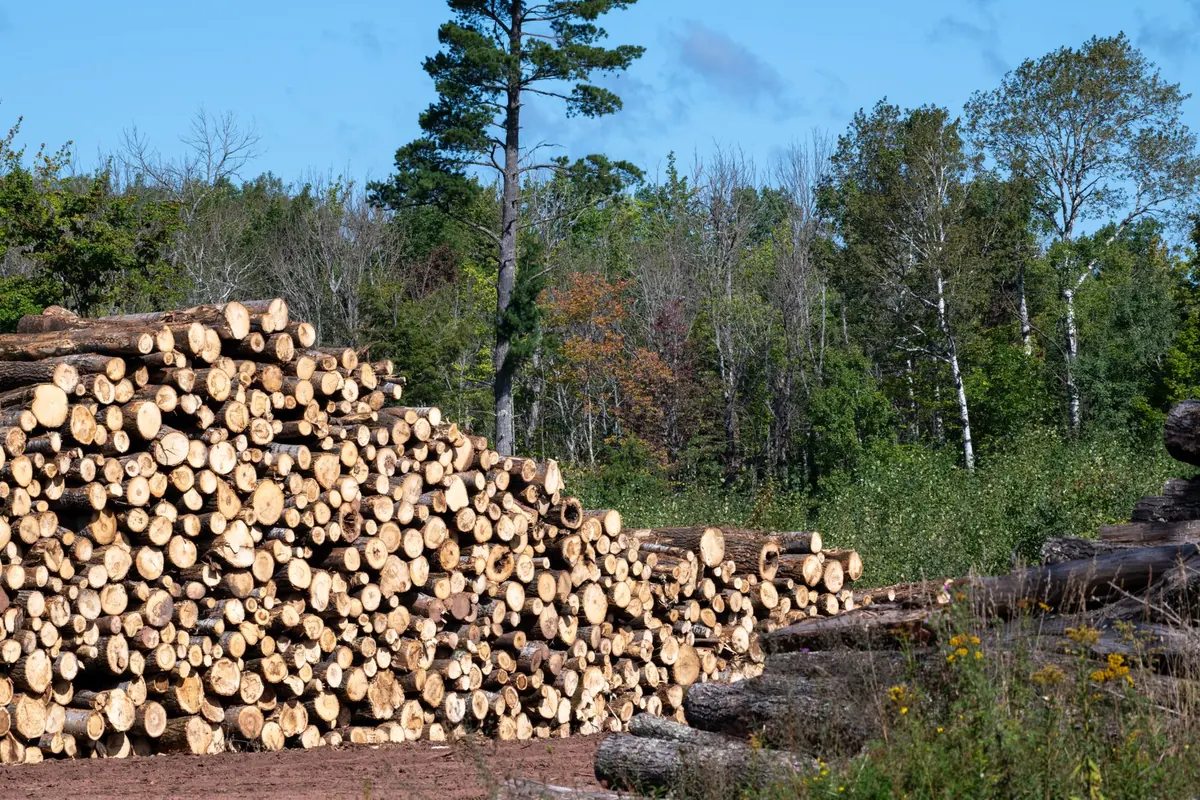
Walk a small woodlot in early spring and you can often read its history in the understory. One stand shows tall straight stems, deep shade, and a soft floor of last year's leaves. Another is a thicket of raspberry cane and knee-high seedlings rising out of fresh slash. Both were logged. Both are still forest. Which one gives the owner what they wanted twenty years from now depends on ground you can actually walk on: slope, soil, species, and what the person signing the cheque cared about.
Two Labels, Several Different Practices
Clear-cutting is easy to define. Every merchantable tree in a defined area comes down in one operation, and the site is regenerated naturally or by planting. Foresters call it even-aged management, because the new stand starts life together.
"Selective logging" is a much looser term, and that looseness causes trouble. It can mean genuine single-tree selection, where a forester marks trees across a range of diameters on a planned return interval. It can mean diameter-limit cutting, where everything above a certain size goes. Or it can mean high-grading — taking the best trees and leaving the rest.
- Single-tree selection: scattered harvest across size classes; suits shade-tolerant species like sugar maple, beech, and hemlock.
- Group selection: small openings, often a fraction of an acre, that let some light reach the floor.
- Shelterwood: partial removal now, final removal once seedlings are established.
- Clear-cut with regeneration: full removal, then natural seeding or planting.
High-grading deserves a plain warning. It removes the best genetics, leaves defective and slow-growing trees to seed the next stand, and quietly reduces what the woodlot is worth a generation later. It is the most common form of logging on small private land, and it is rarely good forestry no matter how gentle it looks from the road.
Biodiversity: Structure Is the Story
Selection keeps the forest's vertical structure intact — canopy, midstory, shrubs, down wood. That matters for salamanders under logs, for lichens and mosses that need shade and humidity, and for interior songbirds that avoid edges. Dead standing trees, which many landowners want removed, are among the most valuable habitat features on the property.
Clear-cutting resets succession. Sunlight floods the ground, and the response is fast: grasses, brambles, aspen sprouts, pin cherry, a flush of insects. Several species in real decline depend on exactly that young forest — ruffed grouse, American woodcock, golden-winged warbler, New England cottontail. A property with no young forest is missing a habitat type, just as one with no old trees is.
On small parcels, scale cuts both ways. A three-acre opening inside a twenty-acre woodlot creates a lot of edge, and edge favors nest predators and cowbirds. Deer browse, heavy in many settled landscapes, can wipe out oak and other palatable seedlings after a clear-cut, leaving a stand of unpalatable species. Selection avoids that particular problem but does not create the young forest that some wildlife needs.
Soil, Water, and the Roads You Build
Which method causes more erosion is the wrong question. Slope, soil texture, water, timing, and road layout decide that. Bare mineral soil on a ten percent grade above a brook will move in a hard rain whether the trees came off in one pass or five.
What actually protects a site:
- Leave an unlogged buffer along streams, ponds, and wet seeps. Width depends on your state's guidelines and the site, but wider is safer.
- Keep equipment off saturated ground. Frozen ground with snow cover, or a dry summer, does far less damage than a wet October.
- Plan skid trails before the first tree falls, keep them drained, and lay slash on them where soils are fragile.
- Limit how much tops and branches leave the site if you sell biomass; those nutrients belong to the next stand.
Selection has its own soil cost. Every entry means machinery moving over the same ground, compacting soil and nicking the roots of trees you intend to keep. Three light cuts over thirty years can disturb more acreage than one heavier cut, and the residual trees often grow more slowly afterward.
Carbon: A Ledger That Runs for Decades
Forest carbon sits in living trees, dead wood, soils, and wood products. A clear-cut moves a large amount of carbon quickly — some into lumber and panels that hold it for decades, some into the atmosphere as the slash and roots decay. Regrowth pulls carbon back, and over a full rotation the ledger can come close to balancing, provided the land actually returns to forest and is not converted to something else.
Selection removes less carbon at once and keeps the stand in a continuous-cover condition, which reduces the initial pulse. But repeated entries damage residuals, suppress growth, and slowly reduce the stand's sequestration rate. Sites with deep organic soils or high water tables are more sensitive to any disturbance, because carbon stored in wet soil can be lost when drainage and compaction change the hydrology.
The honest summary: what happens in the twenty years after the cut matters more than the method name on the contract. If regeneration fails — from deer, from invasive plants, from a bad seed year — the carbon argument collapses either way.
The Money Question
Clear-cutting usually wins on immediate revenue. There is more volume per acre, the sale is simpler to administer, buyers are easier to find, and per-unit costs are lower. For a five- or ten-acre parcel, a clear-cut may be the only harvest a logger will travel for at all.
Selection spreads income across entries instead of concentrating it, and it needs markets for lower-grade material — pulp, firewood, pallet stock. In some regions those markets are thin enough that a thinning operation barely covers its cost. Against that, you keep growing stock on the land, you keep the woodland looking like woodland, and in many places you keep eligibility for current-use or forestry tax programs that require a minimum stocking level. Removal can trigger a penalty tax.
Get at least two written bids, and never sell standing timber on a handshake. Payment terms, road repair, damaged residual trees, cleanup, and the harvest window all belong in the contract.
Tax treatment of timber income is its own subject — often favorable, occasionally not — so ask an accountant who works with woodland owners rather than guessing.
When Clear-Cutting Is the Right Call
Some stands genuinely need it. Aspen, jack pine, paper birch, and many pines regenerate poorly under a canopy that no longer lets light through. So do stands of low-quality, diseased, or storm-damaged timber where there is little value left to protect. Minor salvage after windthrow or insect outbreak is often a clear-cut in practice.
Some ground should never be clear-cut regardless of species: steep erodible slopes, shallow soils over bedrock, stream corridors, wetlands, and small parcels where the opening would swallow the whole woodlot. Group selection of quarter- to half-acre patches is a reasonable middle path on many sites, mimicking the gap dynamics that natural forests create on their own.
Before the Saw Starts: A Practical Checklist
- Write down your goals. Firewood, wildlife, retirement income, a view, a legacy — they point to different prescriptions.
- Hire a forester, not just a logger. A state service forester or a consulting forester can mark trees, define the harvest, and represent your interests in the sale.
- Check the rules first. Many states and counties require notification or a permit, and tax programs often have stocking requirements. A forester will know what applies.
- Walk the boundaries and wetlands with the forester before anything is marked. Paint stream buffers, leave trees, and property lines.
- Put the sale in writing, with a clear harvest period, road standards, damage clauses, and payment schedule.
- Watch the weather. Frozen ground or a dry spell protects soil in ways no contract clause can.
- Revisit in year one and year three. Look at what regenerated, how the residuals fared, and whether invasive plants got a foothold.
The choice between selective logging and clear-cutting is not a moral one. It is a match between a method, a piece of ground, and an owner's intention. Two neighboring woodlots can be managed in opposite ways and both be handled well — as long as somebody walked the ground before the first tree fell, and someone is watching it after.
Related posts
More stories you’ll love reading